
'undead' with Jessica O'Donoghue
- Mar 28
- 6 min read
Interview - March 28th, 2026
Quick Questions
Favourite place to perform in Australia:
I love performing at Carriageworks as it’s such a raw space and such a blank canvas. Artistically, it feels like anything is possible there, and that is extremely exciting to me.
Is there an aria you could sing endlessly without ever tiring of it?
I love singing Life Story by Thomas Adès, which is also on my new album undead. It’s an extraordinary song. Sharp, wild and theatrical, I honestly feel like it was written for me.
What’s a dream role you haven’t had the chance to perform yet?
I would love to play the Unknown Protagonist in Philip Venables’ 4.48 Psychosis. It’s an astonishing work and an extraordinary role.
Opera you think is a bit underrated:
Honestly, most contemporary opera! So many people are put off by the idea of new work before they’ve even experienced it, but there are so many contemporary masterpieces out there that audiences simply don’t know yet.
Fun fact about you most people don’t know:
My Dad was once a Cleo centrefold.
On your 2026 Season
2026 is shaping up to be a very exciting year for me, but in a slightly different way. Alongside some major performances, including The Oresteia by Liza Lim with Sydney Chamber Opera, and live performances of my album undead along the east coast, this year has a strong compositional focus.
I’ll be completing, performing and recording my second chamber opera, Running Man, in collaboration with Sydney Chamber Opera and Ensemble Offspring. I also have new works being recorded and premiered by Luminescence Chamber Singers at the Canberra International Music Festival as part of their collaboration with Grammy Award-winning US artists William Brittelle and Cameron Beauchamp (Roomful of Teeth) and local sound designer Tilman Robinson, as well as a new choral work, The Torturing Pattern, to be recorded by the Sydney Conservatorium Chamber Choir. On top of that, I’ll be completing my PhD in composition under the supervision of Liza Lim and Paul Stanhope which will be the culmination of a four-year journey of enormous artistic growth and inspiration.
I’m genuinely excited by this year. Professionally, 2025 was immense: performing the premiere of Nico Muhly’s Aphrodite with Sydney Chamber Opera, recording and releasing undead through ABC Classic, continuing my work as Co-Artistic Director and core ensemble member of The Song Company, pursuing my PhD, and, of course, being a mother to two beautiful children. It was a huge year artistically (and personally).
However, one thing that really crystalised for me last year was how fleeting new operatic works can be. So much time, artistry and resources go into creating them, and yet many only receive a single premiere season before disappearing. That feels like a huge loss to me. I want to dedicate more of my time to helping create, document and advocate for new work so it can have a longer life, reach wider audiences, and become part of the operatic canon in a meaningful way. That impulse sits behind undead, and it also sits behind my growing focus on composition this year.
About undead
undead is a dream project for me, and one that I had been imagining for a long time. At its heart was a frustration I’d been carrying for years: that so many outstanding Australian contemporary operatic works have very little longevity or reach, despite how powerful and accomplished they are.
My aim with undead was to capture and document some of the extraordinary repertoire I’ve had the privilege of performing, and to share that world with a broader audience. I’m deeply passionate about this music. It is dramatically rich, musically adventurous, emotionally powerful, and capable of moving contemporary audiences in very profound ways. I wanted to create an invitation into that world.
The album is also a snapshot of the extraordinary diversity of operatic voices currently being created in Australia. By presenting arias and excerpts, the idea is to offer audiences an accessible entry point, presenting these incredible works in bite-sized form, so that contemporary opera feels less intimidating and more available. My hope is that listeners are drawn in, become curious, and want to explore the larger works from which these pieces come.
Performing undead live is especially fulfilling, because one of my intentions with the recording was to keep these arias connected to their dramatic context. For me, storytelling, embodiment and theatrical presence are inseparable from singing. The live performance allows that dimension to really come into play.
Another important part of the project is access. I hope undead also becomes a resource for young and emerging singers who are looking for repertoire, roles and stories that feel alive, relevant and connected to their own world. I would love it to inspire a new generation of singers to embrace contemporary opera alongside the more traditional canon.
About The Oresteia
I really can’t give too much away yet, except to say that audiences are in for a wild ride!
Liza Lim and Barrie Kosky, in the hands of Sydney Chamber Opera and director Imara Savage, already makes for an extraordinary combination. Add to that the incredible creative team of Elizabeth Gadsby, Charles Davis and Alexander Berlage, and a dream cast including Jessica Aszodi, Jane Sheldon, Mitch Riley, Simon Lobelson, Daniel Szesiong Todd and myself, it really is not to be missed.
It will be intense, visually stunning, musically powerful and, I think, deeply transformative. What more could you want from a night at the opera?
Jessica's Singing Journey
My singing journey has been quite unconventional. I started performing professionally at a very young age as a jazz and pop singer, recording albums, singing with big bands, performing at festivals including all the major Australian jazz festivals and Woodford Folk Festival, and working extensively in cabaret and musical theatre. I had already performed stadium gigs in front of tens of thousands of people before I’d finished high school.
Classical singing came later, when I was at university. I was drawn to opera because I wanted to pursue vocal craft and technique at the highest possible level. That led me through the more traditional pathway of Young Artist programs and early operatic roles, particularly with Opera Queensland at that stage.
But over time I became a little disillusioned. I found myself feeling creatively constrained by traditional opera and by an industry that, at times, felt disconnected from the stories and perspectives I most wanted to engage with as an artist.
After my time at the Royal Opera House, Covent Garden, I actually decided to step away from opera and return to my jazz and pop roots. Then, around that time, Jack Symonds asked me to sing the lead role in Smetanin’s Mayakovsky with Sydney Chamber Opera. I initially said no (I remember saying, “I don’t sing opera anymore!”) But another colleague encouraged me to do it, promising me that Sydney Chamber Opera was “different”. They were absolutely right.
From that point on, my journey became about discovering the world of contemporary opera and everything it could be: dramatically alive, musically adventurous, emotionally resonant, and open to all the complexity of contemporary storytelling. I feel completely at home in that space. It’s where I come alive as an artist.
For me, contemporary opera is not just about singing beautifully — it’s about full-bodied storytelling, risk, transformation and connection. That is what keeps drawing me back and propelling me to share this incredible world.
On New Works
I talk about this a lot, because I actually think it’s a myth that people “don’t like new music”. For one thing, there are so many different kinds of new music that it doesn’t make sense to dismiss it as one thing, and I hope undead demonstrates just how broad, diverse and compelling contemporary operatic writing can be.
New operatic works are deeply multidisciplinary experiences. You’re encountering story through sound, text, performance, design and theatrical imagination all at once. And often the narratives themselves are resonant, urgent and powerfully connected to the world we live in now. There is so much to engage with. Even if some elements feel unfamiliar or challenging, that challenge can be part of what makes the experience rewarding.
I think there is sometimes an assumption that opera reached its peak in the eighteenth and nineteenth centuries and that all the masterpieces have already been written and our job now is simply to preserve them. But I just don’t believe that to be true. There are contemporary masterpieces. There will be future masterpieces. Great opera did not stop being made two hundred years ago.
Yes, new work can ask more of us. But audiences are intelligent, curious and capable of taking that journey, especially when the work is presented with care, context and artistic excellence.
Ultimately, I think it is our responsibility within the industry to make new work more available, more visible and more approachable. We need to invite audiences in, not gatekeep the experience. We need to stop treating contemporary opera as something obscure or apologising for it, and instead champion it for what it is: a living, evolving artform.
That is also one of the driving impulses behind undead. It’s a way of opening the door gently and offering these extraordinary contemporary works in a form that feels immediate, engaging and accessible.
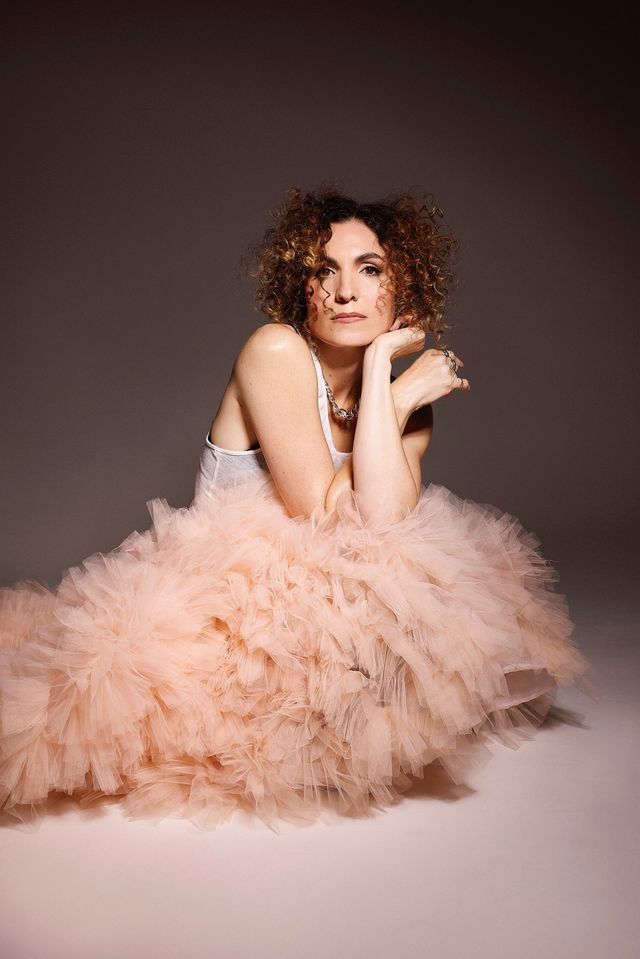
Image provided by artist.


Comments